Comprehensive Analysis of Key Tools and Advanced Technologies in the Geomembrane Industry: From Installation Engineering to Digital Quality Assurance
The geomembrane industry, as one of the core pillars of geosynthetic engineering, plays a fundamental role in water resource management, environmental protection, the mining industry, and infrastructural projects. Geomembranes are impermeable polymeric sheets, mostly manufactured from High-Density Polyethylene (HDPE), Polyvinyl Chloride (PVC), Linear Low-Density Polyethylene (LLDPE), or Polypropylene (PP), designed to create a barrier against the migration of fluids and gases. However, the ultimate efficiency of these lining systems depends not only on the intrinsic properties of the material but also on precision during the installation process and the utilization of specialized tools that guarantee seam integrity and the long-term durability of the structure. This report provides a deep and technical evaluation of the tools used in the preparation, installation, welding, non-destructive testing, and modern data management systems within this industry.
Engineering Infrastructure and Subgrade Preparation Tools
The successful installation of a geomembrane begins with the meticulous preparation of the surface upon which the layer will be placed. Any shortcomings in this stage can lead to structural failure in the long term.
Mechanical Excavation and Leveling Equipment
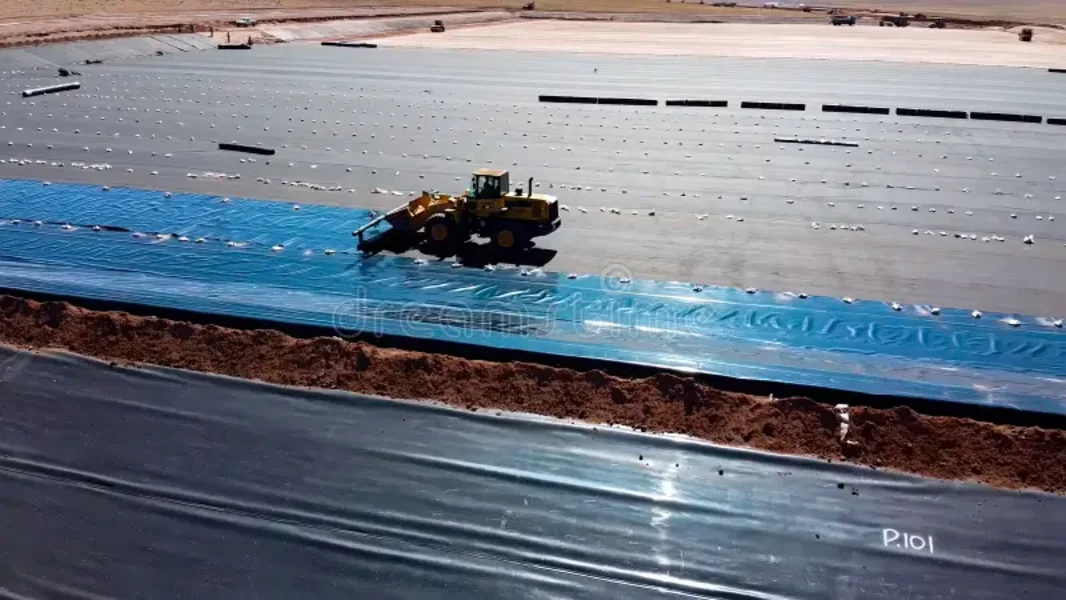
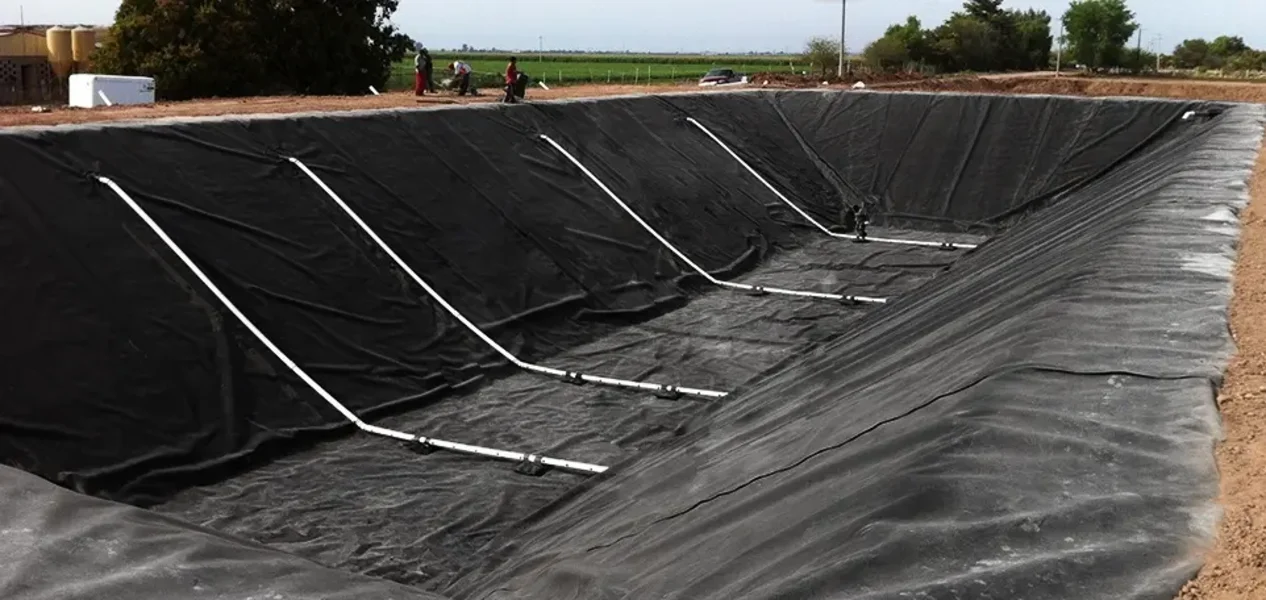
To prepare the site, utilizing heavy machinery such as bulldozers and backhoes is mandatory to remove obstacles, sharp stones, and vegetation. The subgrade surface must be compacted in a manner that provides a stable, unyielding foundation for the geomembrane. Vibratory Rollers are the primary tools to achieve the required compaction, preventing differential settlement that induces stress in the liner. The ideal subgrade must be a uniform surface, completely free of any sharp objects that possess the potential to puncture the layer.
Final Cleansing Tools and Industrial Air Blowers
Following initial leveling, final cleaning is performed using industrial air blowers and sweepers to eliminate fine particles, dust, and moisture from the specific areas where welding will take place. The presence of contamination within the overlap zone can lead to the formation of weak bonds and microscopic leaks.
Thermal Welding Technologies and Bonding Mechanisms
Geomembrane seaming is a process during which, through the simultaneous application of heat and pressure, the polymeric structure of two sheets is fused together, establishing a sustainable molecular bond.
Hot Wedge Welders
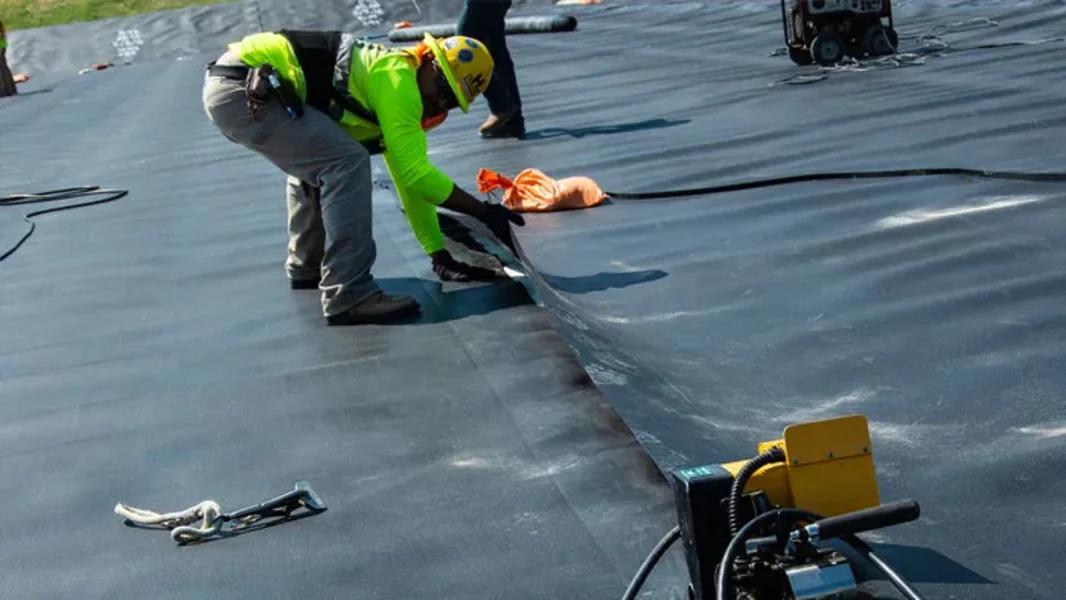
These machines are the primary tools for executing long seams in large-scale projects. Their operational mechanism involves a heated metal wedge that travels between two overlapped layers.
- Melting and Pressure Mechanism: The thermal wedge heats the polymer surface up to its melting point (typically between 280 and 450 °C), and immediately, pressure rollers squeeze the two molten layers together.
- Dual-Track Seaming and Test Channel: Modern machines, such as the Leister Comet or Demtech Pro-Wedge series, create dual-track parallel seams with a hollow channel left in between. This clever design enables subsequent non-destructive air pressure testing.
Hand-held Extruders and Detail-Oriented Tools
For areas with restricted space, such as around pipe penetrations, sharp angles, and localized repairs, hand-held extrusion welders are utilized. These devices melt a polymeric welding rod and extrude the molten extrudate onto the seam.
- Importance of Temperature and Preheating: Extruders are equipped with an auxiliary hot-air blower that preheats the geomembrane surface prior to extrudate injection, preventing thermal shock and cold welds.
Auxiliary Tools and Mechanical Surface Preparation
Prior to commencing the welding process, particularly in the extrusion method, physical preparation of the edges is essential to guarantee weld quality.
Grinders and Scrapers
Heavy polymers like HDPE undergo surface oxidation when exposed to air. This oxidized layer prevents the extrusion paste from fully bonding with the sheet body. Hand-held grinders or mechanical scrapers are used to remove this layer (up to a depth of approximately 0.02 mm). This process must be executed a maximum of 20 minutes prior to welding to prevent re-oxidation.
Manual and Silicone Hand Rollers (Pressure Rollers)
During hot-air welding or when applying repair patches, hand rollers with silicone or steel coatings are utilized. These tools are designed to apply uniform pressure and expel air bubbles from between the layers. Silicone rollers are widely used in the geomembrane industry due to their resistance to sticking to molten material.
Leak Location Systems and Non-Destructive Testing (NDT)
Final approval of a geomembrane project requires proving the absolute impermeability of all seams and surfaces.
Air Pressure Testing Kits
These kits include an air pump, a precision manometer, and a hollow needle. The needle is inserted into the central channel of the dual-track weld, and air is pumped into it at a pressure of approximately 2.5 bar. The capacity to maintain this pressure over a specified timeframe (typically 5 minutes) according to the ASTM D5820 standard verifies the continuity and integrity of the weld along the entire run.
Vacuum Box and Vacuum Pumps
To inspect areas where access to an air channel is unavailable (such as extrusion welds or repair patches), a vacuum box is employed. This tool consists of a box featuring a transparent window and flexible rubber gaskets.
- Testing Process: First, the surface is coated with a foaming soapy solution, and then, by creating a vacuum inside the box using a pump (up to approximately 0.5 bar), any leak or orifice triggers the formation of soap bubbles, which the operator can visually observe and mark for repair.
Electrical Leak Location (ELL)
The most advanced leak detection tools currently available are ELL systems, which operate based on the electrical insulation properties of the geomembrane.
- Arc Testing: This device uses a high-voltage assembly to pass a current across a dry sheet surface. If even the smallest puncture is present, an electrical arc (spark) is triggered between the assembly and the moist subgrade or underlying conductive layer.
- Water Puddle: In this method, a small volume of water is used as a conductor, and by moving a wet brush across the surface, leaks with areas smaller than 1 $\text{mm}^2$ are identified.
- Spark Testing: This method is utilized for specialized geomembranes that possess a thin conductive layer on their back (conductive-backed) and provides extremely high accuracy in identifying installation defects according to the ASTM D7240 standard.
Destructive Testing Tools and Mechanical Bond Analysis
While non-destructive tests solely verify seam continuity, conducting destructive tests is mandatory to ensure the mechanical strength of the molecular bond.
Field Tensiometers
A field tensiometer (such as the Leister EXAMO 300F) is a device that subjects specimens cut from the weld seam (coupons) to tensile forces.
- Peel Test: This test evaluates whether the two layers of the seam separate under perpendicular forces. The objective is for the geomembrane sheet to tear before the seam interface separates, known as a Film Tear Bond (FTB).
- Shear Test: In this configuration, the specimen is pulled from both ends to measure the seam's resistance against tensile stresses parallel to the sheet surface. This test simulates the stresses exerted on the seam due to thermal contraction or ground settlement.
According to the GRI-GM19 standard, the seam strength must meet a specific percentage of the parent sheet's strength (e.g., approximately 95% for shear strength in HDPE).
Specimen Cutters (Coupon Cutters)
To ensure the accuracy of test results, weld coupons must be cut precisely to standard dimensions (25 mm in width). Utilizing scissors or knives can create micro-cracks along the specimen edges, leading to testing errors. Specialized tools called "coupon cutters" utilize press blades to produce perfectly uniform and precise specimens.
Digital Transformation: Smart Tools and Data Management (GRI-GM32)
The geomembrane industry is transitioning from traditional methods toward digital documentation and real-time monitoring.
Welding Devices Equipped with Data Loggers
The modern GRI-GM32 and ASTM AM/ASTM D8468-23 standards recommend the use of welding equipment that automatically records critical parameters. These parameters include temperature, travel speed, and roller pressure for every second of the operation.
- Pro-Data System and Cloud Management: Brands like Demtech and Leister offer systems that pair the GPS coordinates of every centimeter of the weld with its technical parameters. This "black box" allows Construction Quality Assurance (CQA) engineers to review the precise installation history of any specific point in a pond or landfill years after project completion.
- Smart Alerts: Should any parameter deviate (e.g., a temperature drop due to high winds or a generator voltage fluctuation), the device alerts the operator via audible and visual warnings to halt operations and rectify the issue.
Digital Mapping Tools and AI
Utilizing artificial intelligence to analyze welding graphs and identify hidden failure patterns is an emerging trend in this industry. Furthermore, three-dimensional electronic mapping (3D E-mapping), alongside ELL testing, aids in generating precise maps of all potential punctures and damaged points.
Maintenance, Calibration, and Tool Sustainability Standards
The optimal performance of geomembrane tools requires strict adherence to calibration and maintenance protocols under harsh site conditions.
Daily Calibration Protocols
Prior to commencing work each day, executing a "trial weld" is mandatory. In this process, a sample is welded under environmental conditions identical to the project and tested using a tensiometer. This procedure optimizes the machine settings based on ambient temperature, humidity, and the exact sheet thickness. Neglecting this stage can lead to "burning" the sheet due to excessive heat or a "cold weld" caused by excessive machine speed.
Technical Maintenance and Equipment Lifespan
- Cleaning the Elements: In hot wedge machines, the accumulation of soot and polymer residue on the wedge can cause uneven heat transfer. Cleaning the wedge with specialized brass wire brushes is essential, particularly in PVC projects where corrosive gases are released.
- Power Supply Management: Geomembrane welding machines consume high power (typically between 800 and 3,000 Watts). Voltage fluctuations caused by weak generators or excessively long extension cables are the primary enemy of the electronic control boards in these devices. Utilizing voltage stabilizers on remote sites is highly recommended.
- Periodic Tensiometer Servicing: Load cells in tensiometers must be recalibrated every 6 months using standard calibration kits to ensure the accuracy of the values reported in QA/QC documentation.
Occupational Health and Safety Considerations in Tool Operation
Operating high-voltage electrical and thermal equipment on construction sites carries its own set of hazards.
- Thermal Protection: Operators must utilize insulated gloves and heat-resistant apparel to protect against accidental contact with the hot wedge (450 °C) or the molten extruder paste.
- Toxic Gas Management: During the welding of specific geomembranes like PVC, acidic fumes are emitted. Utilizing filtered respirators and ensuring adequate ventilation, particularly in confined spaces such as concrete tanks or tunnels, is mandatory.
- Electrical Shock Safety: Given that most of these tests are conducted in the presence of moisture or over conductive layers, all equipment must be equipped with proper grounding (earthing) systems and Residual Current Devices (RCDs).
Conclusion and Future Industry Outlook
The geomembrane tooling industry has evolved from a purely mechanical field into an interdisciplinary science combining mechanics, thermodynamics, and data science. Modern equipment today not only fulfills the task of joining sheets but also acts as smart monitoring tools, minimizing engineering risks.
The future of this industry is moving toward full automation, where robotic welders equipped with advanced sensors dynamically adjust speed and temperature based on real-time environmental conditions, streaming verification reports live to the client. Within this framework, the role of electrical leak location (ELL) tools will become increasingly prominent due to their unrivaled precision in identifying human errors.
Ultimately, the success of any lining project relies on a triangle comprising "high-quality materials," "engineered tools," and "trained technicians." Investing in modern, calibrated tools is not an extra expense, but a long-term insurance policy to preserve stability and environmental health in civil projects. Complying with international standards such as ASTM and GRI at all stages of tool operation guarantees an impermeable performance that will endure for generations to come.